
by Miranda Ings

Insects and I have a complicated relationship. I find them endlessly fascinating, but when faced with the majority of bugs, I am still working on my immediate reaction, which is one of respectful trepidation. While I do my best to rescue insects in my home with a cup and piece of paper, I can’t say that I am typically pleased to find them inside in the first place. As is often the case, there is an exception to this sentiment. I share a blossoming appreciation for a whimsical family of arthropods with a sizable community of folks: the weevil.
Weevils fall under the family Curculionidae, or the true weevils (though they have some imposters!). Small in size, but impressive in numbers, the weevils make up one of the largest animal families, clocking in at 83,000 species across the globe. A 2006 study reported 92 species of weevil on PEI alone, while the maritime provinces as a whole totaled 290 species. As citizen science expands through means such as iNaturalist, that number has grown in the past 20 years. Therefore, if you tend to find yourself in woody areas, chances are you’ve come across a weevil.
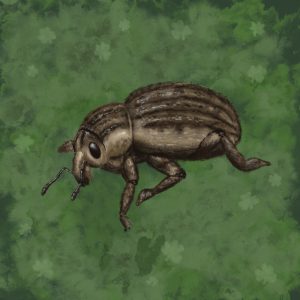
They are certainly one of the more distinct groups of insects, and are so charming to meet that they would make an impression on anyone with a sharp enough eye to pick one out within their leafy neighborhoods. A humorous mnemonic device often heard online to sum up the whimsical physicality of the weevil is “boots and snoots.” This slogan covers the weevil’s two primary identifying traits; typically these fellas boast an impressively prominent snout (or rostrum) and endearingly curious-looking feet.
Boots and snoots aside, the weevils leave their mark (and their chew holes) in the rotting wood, fruits and nuts that they feed on. The acorn weevil, for example, chews tunnels through acorns through which they deposit their eggs. The young then hatch into a certifiable bed and breakfast, as they eat their way out into the world.
Even as a weevil enthusiast, I must concede that certain species have the potential for certain ecological destruction. CBC reported the arrival of the locally-malevolent Beech leef-mining weevil, the likes of which have been an invasive terror in the maritime provinces since 2012. These weevils are relatively harmless in the European beech across the pond, but our local American beech lacks those adaptive genetics, and succumb to the defoliation of the weevils at a 90% mortality rate. However, conservation efforts are being made, and increased public awareness of the issue has helped lessen further impact.
Being insects, you might be expecting a six legged critter that fits on the tip of a finger, but the weevils defy expectations in this regard, too. The largest known weevil, aptly known as the giraffe weevil, can measure up to 9cm (3.5 in)! Their (perhaps humorously) long necks account for over half of their lengthy body, giving them a uniquely disproportionate appearance. In addition to the broad range of shapes and colours, Weevil adults have been known to play dead when threatened, which for them means going belly-up and lying still. These peculiarities, combined with the rather cartoonish name “weevil“ itself, make for an insectan family that is as memorable as it is loveable.
Choosing a favourite weevil is a daunting thing, but if I had to pick just one favorite, I’m inclined to say the Clover leaf weevil. They’re on the small side, typically a mere 5-9mm in length, and are known to be found in – you guessed it – clover fields. Though considered a pest to some, their impact on agriculture has been relatively minimal. Best of all, this little guy is native to PEI, and I’ve had the fortune of meeting more than one while out and about. If you’re enjoying an outdoorsy trek, keep your eyes peeled. You might just find yourself face to face with a weevil!